

Some places surprise you. The
Azuero Peninsula’s Wild Coast is one of them. Most visitors come for the
fishing. But step into the foothills of the Cerro Hoya range — where four
live-water creek trails cut through a patchwork of dry forest, ravine jungle,
and open pasture edge — and you quickly realize this is one of Panama’s most
underappreciated birding destinations.
A visiting naturalist and
professional wildlife guide who spent two days exploring the trails at Los
Buzos put it plainly: the presence of species like the Spectacled Owl, White
Hawk, and Gray-headed Chachalaca is “certain evidence of good potential in this
type of forest.” The Tropical Royal Flycatcher pair he documented at the
waterfall rocks showed up on two consecutive days. The Spectacled Owl on the
Creek Trail has held its territory for over a year. These are not lucky
sightings. This is healthy, productive habitat.
Whether you’re a seasoned
lister, a family looking for something memorable, or a first-time birder who
wants to be genuinely amazed — the trails, the forest, and the wildlife here
will deliver.
Here’s what this guide
covers:
•
The top bird species to look for in the Azuero dry
forest foothills, including confirmed residents on our trails
•
A trail-by-trail breakdown of the four creek systems
and what makes each one unique
•
When to visit and what to bring for the best experience
•
How to combine birding with whale watching, marine
mammals, sea turtles, shorebirds, and more
•
What to expect from horseback birding through the
forest
Why the Azuero Peninsula Belongs on Every Birder’s List
Panama’s birding reputation is
built on the cloud forests of Boquete and the famous Pipeline Road near Panama
City. The Azuero Peninsula doesn’t usually make the shortlist — which is
exactly why it’s so rewarding when you get here.
The Azuero’s tropical dry
forest is shaped by the Cerro Hoya mountain range, which creates a powerful
rain shadow along the Pacific coast. The result is a specialized ecosystem —
one where deciduous trees shed their leaves in the dry season, canopy visibility
opens up dramatically, and the creek ravines become critical refuges for birds
and wildlife throughout the year. The species that thrive here have adapted to
these specific conditions over generations. You won’t find this exact community
of birds anywhere else in Panama.
Los Buzos sits in the foothills
of the Cerro Hoya range, where the forest transitions between dry coastal
scrub, gallery forest along the creek corridors, and more humid ravine jungle.
This overlap of habitats — what biologists call ecotones — is exactly where
bird diversity peaks. Four trails, four creek systems, four distinct
micro-ecosystems. Each one holds different species. Each one is worth
exploring.
Birds to Look For: Your Azuero Checklist
The following species have been
documented by visiting naturalists on the Los Buzos trail system, or are
regularly encountered in the surrounding Cerro Hoya foothill habitat. This is
not an exhaustive list — the forest has more surprises waiting — but these are
the highlights worth planning your visit around.
•
Tropical Royal Flycatcher (Onychorhynchus coronatus)
One of the most visually
stunning birds in the Neotropics. A resident male and female pair have been
documented at the waterfall rocks at the end of the Waterfall Trail, observed
on consecutive days by a visiting naturalist. When this bird fans its crest — a
brilliant sunburst of orange, blue, and black — it is genuinely unforgettable.
Move quietly on the trail approach and let the birds settle. They are habitual
and will return to the same perches.
•
Spectacled Owl (Pulsatrix perspicillata)
A confirmed long-term resident
on the Creek Trail, holding territory at the same site for over a year.
Panama’s largest owl is a spectacular bird — bold white facial markings, rich
brown plumage, and piercing yellow eyes. The Creek Trail’s edge habitat, with
forested slope on one side and open pasture on the other, gives this owl
exactly the hunting corridor it needs. Early morning or late afternoon visits
maximize your chances of an encounter while light is still favorable for
photographs.
•
White Hawk (Pseudastur albicollis)
Actively confirmed hunting on
the Waterfall Trail. A visiting naturalist documented a White Hawk making a
direct strike on a large adult Brown Mantled Howler Monkey — an unexpected
predator-prey interaction that highlights just how dynamic the wildlife here
can be. Watch the open canopy above creek ravines and forest clearings. This
bird is bold and hunts in full daylight.
•
Hummingbirds (Multiple Species)
The flowering trees and
understory plants along all four creek trails attract multiple hummingbird
species. The Veraguan Mango is a regional endemic found along the Pacific slope
of Panama and is an excellent target species. Additional species including the
Snowy-bellied Hummingbird and others are present throughout the year.
Hummingbird activity peaks in the early morning before the canopy heats up.
Watch flowering trees and any red or orange blooms along the trail edges.
•
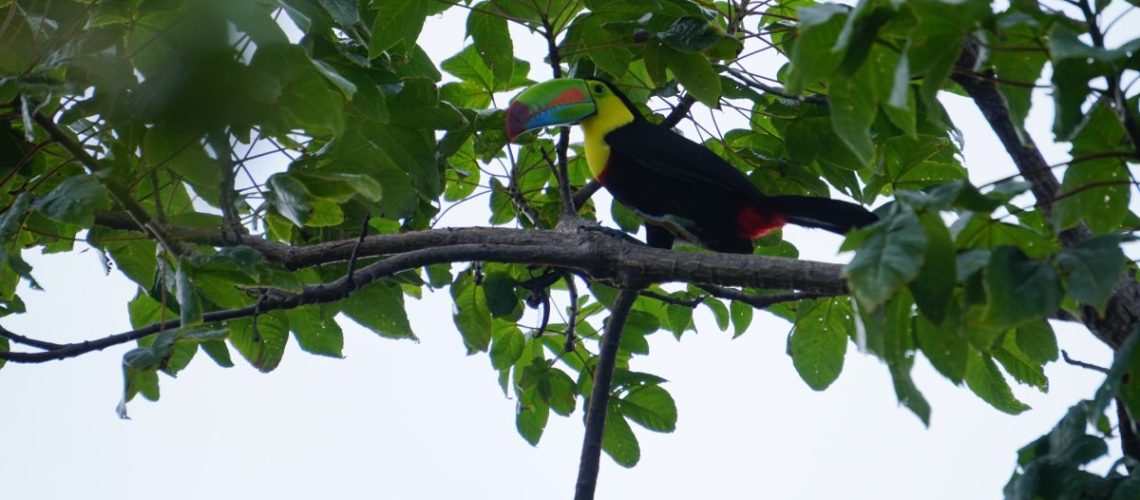
Toucans
Multiple toucan species patrol
the forest canopy in the Cerro Hoya foothills, drawn by fruiting trees along
the trail corridors. Their loud, rattling calls carry far through the forest
and almost always reveal their position before you spot them. Scan the high
canopy from open ridge clearings. The dry season, when the canopy thins,
provides the clearest views.
•
Motmots
Panama’s Motmots are among the
most charismatic birds in the region — slow-moving, pendulum-tailed specialists
of the shaded understory. The humid ravines and creek-side forest at Los Buzos
are ideal habitat. Listen for the low, soft double-hoot call and scan the
mid-story perches carefully. Motmots are creatures of habit and tend to hold
the same perch for long periods, making them excellent subjects for family
members of all ages to observe and photograph.
•
Trogons
The forest interior along the
Mono Titi Trail and Waterfall Trail holds strong Trogon habitat. Trogons perch
upright and still in the mid-story, scanning for insects and fruit — which
makes them easier to observe once located than most forest birds. The key is to
pick up the soft, repetitive call and move toward it slowly. A Lattice-tailed
Trogon sighting in the Cerro Hoya foothills is a memorable life-bird for any
visitor.
•
Black Hawks (Buteogallus spp.)
Common Black Hawks and Great
Black Hawks are regular presences along the coastal and creek edges of the
reserve. They hunt crabs, fish, frogs, and small vertebrates along waterways
and forest margins. Look for their broad, dark silhouettes perched low over
creeks or soaring on thermals above the forest edge. The trail junctions near
water crossings are reliable spots to find them.
•
Great Green Macaw (Ara ambiguus)
Critically endangered globally,
the Great Green Macaw is a genuine and regular presence at Los Buzos. In the
most recent annual Great Green Macaw census, one of the highest recorded
densities of sightings in the entire survey was documented along Salamine Creek
— which runs through our Creek Trail. These are not occasional flyovers. We see
them regularly. Their flight paths through the Cerro Hoya foothill corridor and
the creek gallery forest make this property one of the most reliable locations
in Panama to encounter this species. Scan the high canopy at dawn when macaws
move between feeding areas, and listen for their loud, harsh calls carrying
through the forest before you ever spot them.
•
Other Notable Species
The trails at Los Buzos have
also produced Crimson-crested Woodpecker, Little Tinamou, Striated Heron,
Gray-headed Chachalaca, Great Green Macaw, and an abundance of flycatcher
species. The Gray-headed Chachalaca’s presence in specific zones is a reliable
indicator of forest health — this bird needs mature habitat with wild berries
and appropriate browse to thrive. Great Green Macaws are regularly seen along
the Salamine Creek corridor.
The Trails: Four Creek Systems, Four Different Worlds
What sets Los Buzos apart from
most birding destinations in Panama is the variety packed into a single
property. Four trail systems, each following a live creek that holds water even
at the peak of the dry season. Each one has its own micro-climate, its own
forest structure, and its own community of birds. Walk all four in a single
visit and you will encounter species on one trail that you never saw on the
others.
The Waterfall Trail
This is the showpiece trail. It
runs along the edge of two mountains, creating a micro-ecosystem of deep shade,
consistent humidity, and remarkable bird activity. A visiting naturalist noted
that the trail was “bursting with birds” at 10:30 in the morning — well past
the early window when most dry forest birding slows down. The abundance of tree
canopy, the coolness of the ravine, and the presence of water sustain activity
throughout the day.
The resident Tropical Royal
Flycatcher pair lives at the waterfall rocks at the trail’s end. The White Hawk
has been documented hunting along the upper section. Sounds carry beautifully
through the ravine — chirps, songs, and calls are present for most of the walk.
This trail is accessible for all ages and is a strong starting point for any
birding visit.
The Creek Trail
The Creek Trail opens quietly.
The bird activity builds as you settle in and the forest resumes its rhythm
around you. The species here are noticeably different from the Waterfall Trail
— a reflection of the distinct micro-habitat. A forested slope rises on one
side; open cattle pasture from the neighboring property borders the other. This
edge creates a richer mix of habitat types in a short stretch of trail.
Flycatchers are abundant here.
And the headline resident: a Spectacled Owl has held territory on this trail
for over a year. This is as close to a guaranteed owl encounter as you will
find in Panama’s dry forest. Early morning or dusk visits give the best light
for observation.
The Mono Titi Trail
Mono Titi — named for the
White-faced Capuchin monkeys (Cebus capucinus) that inhabit the ravines along
this route. These intelligent, social primates are a delight to watch and often
draw attention to the same fruiting trees that attract birds. The forest here
is more humid and lush than the other trails, with the character of rainforest
gallery forest along the creek.
Confirmed species on this trail
include the Crimson-crested Woodpecker, Little Tinamou, and Striated Heron.
Trogons and Motmots are well-suited to the shaded interior here. The
combination of primates, forest birds, and the creek environment makes this trail
particularly appealing for families and younger visitors.
The Ocean Trail
The fourth trail descends
through serpentine ravines from the forest foothills toward the Pacific coast.
The transition from dry forest interior to coastal edge opens up a new set of
species. Black Hawks are common here, hunting the creek mouths and coastal
margin. Migratory species move through this corridor during the right seasons.
Gray-headed Chachalaca appear in zones where the forest is mature enough to
support their habitat requirements — reliable wild berries, appropriate browse,
and undisturbed undergrowth.
Birding by Horseback: A Different Perspective
One of the more unusual and
rewarding ways to experience the birding at Los Buzos is from horseback. The
property’s trail network was originally developed for both foot and horse
travel, and the elevated vantage point of a horse can change what you see — and
how the birds respond to your presence.
Horses move quietly through the
forest and are a familiar presence in the Azuero countryside. Many bird species
that would flush from a walking human will hold their position as a horse
passes. The higher eye level gives you a different angle into the mid-story
canopy. And for younger family members or visitors who may find long trail
walks challenging, horseback provides a comfortable way to cover more ground
while still experiencing the birding.
Canopy species and raptors in
particular — Toucans, White Hawks, Black Hawks, and macaws — are well-suited to
horseback observation from the open ridge sections of the trails. The
combination of a slow, quiet pace and an elevated sightline makes for a genuinely
productive approach to forest birding.
When to Visit: Seasons and What to Expect
The Azuero Peninsula has two
distinct seasons, and both offer genuine birding value. Your choice of timing
should be guided by which experience appeals to you most.
**Dry Season (December–April): **The
most productive window for forest birding. The deciduous trees shed their
leaves, dramatically opening up the canopy and making birds far easier to spot
and photograph. Trails are dry and firm. This is also prime season for offshore
fishing, with Yellowfin Tuna and Roosterfish at their most abundant.
**Green Season (May–November): **The
forest transforms into dense, lush jungle. Visibility in the canopy is reduced,
but breeding behaviors, hummingbird activity, and nesting are all at their most
active. The creek trails stay productive year-round because the live water
sustains resident species regardless of season. August is a particularly
special time: migratory shorebird species from the Southern Hemisphere pass
through the coastal zones of the Azuero in significant numbers, adding a
completely different dimension to a birding visit.
What to Bring
The forest trails here are
accessible, but the environment is warm and humid year-round. Come prepared and
you will be comfortable throughout.
•
Binoculars — 8×42 or 10×42 waterproof models are ideal
for the light conditions in the forest and along the creek ravines
•
A current Panama field guide for real-time species
identification
•
Lightweight, moisture-wicking clothing in neutral or
earth tones
•
Sturdy, closed-toe shoes or waterproof hiking boots —
some trail sections involve creek crossings
•
A spotting scope if you plan to scan for raptors and
canopy species from open ridge areas
•
Sunscreen, insect repellent, and a reusable water
bottle
•
A camera with a telephoto lens if photography is a
priority
Beyond the Forest: Wildlife on the Wild Coast
The birding at Los Buzos does
not stop at the forest edge. The Wild Coast of the Azuero Peninsula is one of
the most biologically rich marine environments in the Eastern Pacific, and the
wildlife encounters available by kayak and panga are every bit as extraordinary
as what you find on the trails.
Whale Watching and Marine Mammals
Humpback Whales visit the
waters off the Azuero coast twice a year — Northern Hemisphere humpbacks from
June through August, and Southern Hemisphere humpbacks from August through
October. This overlap in August creates one of the most remarkable whale watching
opportunities in all of Panama, with individuals and mother-calf pairs feeding
and socializing in close proximity to shore. Spinner Dolphins and Bottlenose
Dolphins are regular presences year-round. Panga excursions from the resort put
you directly into this environment.
Sea Turtles
The beaches of the Azuero
Peninsula are critical nesting habitat for Olive Ridley, Leatherback, and
Hawksbill sea turtles — all protected species. Nesting season runs primarily
from July through November. Guided turtle observation visits are a genuinely moving
experience, particularly for families with children, and represent a meaningful
wildlife encounter that very few destinations can offer.
Migratory Shorebirds (August)
August is a hidden gem for
birders visiting the Wild Coast. As the breeding season closes in North
America, the first southbound shorebird migrants begin moving through the
Azuero coastal zone. Sandpipers, plovers, and other waders appear in numbers
along the beaches and estuaries. At the same time, northward-migrating
shorebirds from South America pass through the region. For birders visiting in
August, this adds a significant bonus to an already strong forest birding
experience.
Seabirds
Offshore panga trips produce
regular sightings of Magnificent Frigatebirds, Brown Boobies, and various tern
species. Pelicans are a constant presence along the coast. Birders with an
interest in pelagic and coastal species will find the boat-based options here
complementary to the forest trails.
Sportfishing
Los Buzos has long been
recognized as a world-class kayak fishing destination. Roosterfish, Cubera
Snapper, and Yellowfin Tuna are the headline targets. For birders who also
fish, the combination of morning forest birding and afternoon offshore fishing
makes for a deeply satisfying full-day itinerary. Both kayak and panga options
are available depending on the target species and the conditions.
Your Base: Los Buzos Resort
Los Buzos sits at the
intersection of everything the Wild Coast has to offer — forest, coast, and
community. The property is family-owned and family-friendly, with comfortable
accommodations, good food, and a genuine connection to the land and the local environment.
Our local guides know these
trails and these birds. They walk them regularly. They know where the
Spectacled Owl is roosting this week and which section of the Waterfall Trail
has been most active in the early morning. That on-the-ground knowledge is something
no field guide can replace, and it makes a real difference in what you find.
A visit to Los Buzos can be as
focused or as varied as you want. Some guests spend every morning on the forest
trails and every afternoon on the water. Others build in rest days, horseback
rides, beach time, and evening wildlife observation. The flexibility of a
private property with multiple trail systems, marine access, and expert guides
means the itinerary is genuinely yours to shape.
**Reserve your spot for the 2026 season **
Frequently Asked Questions
What is the best time of year
for birding at Los Buzos?
The Dry Season (December to
April) offers the best forest visibility as the deciduous canopy opens up,
making birds significantly easier to spot. August is a special month for
birders who also want coastal wildlife — migratory shorebirds from the Southern
Hemisphere pass through the Azuero coastal zone, and the humpback whale
watching overlap between Northern and Southern Hemisphere populations peaks
during this period.
What bird species are
confirmed on the Los Buzos trails?
A visiting professional
naturalist documented a resident Tropical Royal Flycatcher pair at the
Waterfall Trail, a long-established Spectacled Owl on the Creek Trail, active
White Hawk hunting behavior, and a variety of other species including
Crimson-crested Woodpecker, Little Tinamou, Striated Heron, Gray-headed
Chachalaca, and abundant flycatchers. Toucans, Motmots, Trogons, and Black
Hawks are also present in the Cerro Hoya foothill habitat.
Is this a good destination
for families with children?
Yes. The trail system is
accessible for a range of ages and fitness levels. The Mono Titi Trail in
particular is popular with younger visitors for the White-faced Capuchin monkey
sightings alongside the forest birding. Horseback options are available for
those who prefer not to walk the full trails. Marine wildlife excursions —
whale watching, turtle observation, and dolphin encounters — are also excellent
family experiences.
Can I bird from horseback?
Yes. The Los Buzos trail
network was developed for both foot and horse travel. Horseback birding offers
an elevated canopy view, a quieter approach through the forest, and greater
coverage of the ridge and open sections where raptors and canopy species concentrate.
It is a genuinely productive approach and a comfortable option for visitors of
all experience levels.
What should I bring for
birding on the trails?
Waterproof binoculars (8×42 or
10×42 are the recommended standard), a current Panama field guide, lightweight
neutral-colored clothing, sturdy footwear suitable for creek crossings,
sunscreen, insect repellent, and water. A spotting scope and telephoto camera
lens are worthwhile additions if canopy raptors and photography are priorities.
Are there marine wildlife
opportunities beyond fishing?
Absolutely. The Wild Coast
offers humpback whale watching from June through October (with two populations
overlapping in August), year-round dolphin encounters, sea turtle nesting
observation from July through November, migratory shorebird watching in August,
and regular seabird sightings on offshore panga excursions. Fishing is one of
many excellent options on the water, not the only one.
What makes the trail system
at Los Buzos unique?
Four distinct creek-fed trail
systems, each sustaining its own micro-ecosystem and bird community. The live
water in all four creeks — maintained even at the height of the dry season —
creates wildlife corridors that support resident species year-round. You
encounter genuinely different birds on each trail. That variety, concentrated
within a single private property in the foothills of the Cerro Hoya range, is
rare anywhere in Central America.
Are expert guides available
for birding visits?
Yes. Local guides with current,
on-the-ground knowledge of the trails and their resident species are available.
They know which areas are most active, where established residents like the
Spectacled Owl are currently holding territory, and how to position you for the
best encounters. For visitors with specific target species, sharing your list
with your guide in advance is recommended.