

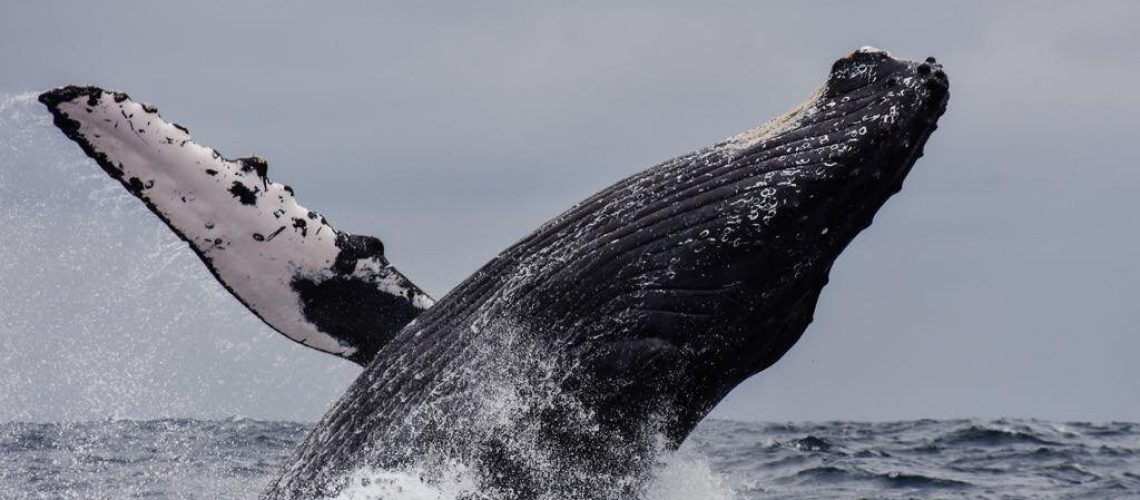
Imagine the ocean surface erupting as 40 tons of raw, primal power launches into the air, crashing back into the sea in a display that shakes you to your core. This isn’t a scene from a documentary viewed on a screen; this is the reality of whale watching in Panama. Forget crowded tour boats and predictable routes. The Wild Coast offers something far more visceral: a front-row seat to the planet’s most magnificent life cycle, unfolding in the deep, untouched waters of the Pacific.
Most travelers only ever see the surface of a destination. They follow the crowds and experience a scripted version of nature. We reject that. Here, you don’t just watch the whales; you venture into their world. You witness the legendary heat runs, hear the haunting songs reverberate through the hull of your boat, and feel the sheer scale of these giants as they breach, spy-hop, and nurture their newborn calves in the world’s most important cetacean nursery.
This guide delivers the intelligence you need to bypass the tourist traps and plan a genuine eco-adventure. You will gain a tactical understanding of the dual-hemisphere migration that makes Panama a global whale watching hotspot. You will learn how to position yourself for the most dramatic encounters, far from the shipping lanes and packed marinas, in a place where the ocean’s giants are the main event.
-
You will understand the unique science that makes Panama the planet’s premier humpback whale sanctuary.
-
You will discover the precise seasonal windows to witness peak activity, from birthing to breaching.
-
You will learn why remote, private expeditions offer an exponentially more profound experience than standard tours.
-
You will be equipped with the ethical guidelines and gear essentials for a responsible and epic marine adventure.
-
You will see how to integrate world-class whale watching in Panama into a multi-sport expedition of a lifetime.
Table of Contents
-
The Best Time for Whale Watching in Panama: 2026 Seasonality Guide
-
Beyond the Crowds: Finding the Best Whale Watching Spots in Panama
-
Ethics, Safety, and Gear: Preparing for Your Marine Expedition
-
Primal Encounters: Whale Watching as Part of Your Wild Coast Adventure
Table of Contents
-
The Best Time for Whale Watching in Panama: 2026 Seasonality Guide
-
Beyond the Crowds: Finding the Best Whale Watching Spots in Panama
-
Ethics, Safety, and Gear: Preparing for Your Marine Expedition
-
Primal Encounters: Whale Watching as Part of Your Wild Coast Adventure
Why Panama is the World’s Premier Humpback Whale Sanctuary
Panama’s geographic position is no accident of nature; it’s a strategic advantage. Acting as a bridge between two continents and a barrier between two oceans, its Pacific coast has become the most critical humpback whale nursery on Earth. Whales travel thousands of miles from feeding grounds in the icy poles to reach these specific warm, protected waters, seeking a safe haven to give birth and mate. This isn’t just a migratory stop; it’s the destination.
What makes Panama truly unique is its role as a dual-hemisphere sanctuary. Humpback populations from both the North and South Pacific converge here, creating a staggering season that lasts for the better part of the year. This deep-water trench, running parallel to the rugged coastline, forms the "Panama Corridor"—a critical biological highway essential for the rearing of calves and the future of the species.
The Science of the Dual Migration
The magic of whale watching in Panama is rooted in two distinct, massive migrations. The Southern Hemisphere population arrives from Antarctica, a journey of over 5,000 miles, to breed and calve from June to November. As they depart, a much smaller Northern Hemisphere population begins its journey from the cold waters of Alaska and California, arriving from November through January. This staggered arrival schedule means the waters off the Wild Coast are teeming with activity for much of the year, a phenomenon found almost nowhere else.
The key is the water temperature. The Pacific waters along the Azuero Peninsula remain consistently warm and stable, providing the ideal thermal environment for newborn calves that lack the thick blubber of adults. This natural incubator allows them to build strength in a protected environment before undertaking the grueling return journey to the poles.
Breeding and Birthing in the Wild Coast Waters
Witnessing the breeding rituals of humpbacks is a bucket-list spectacle. You’ll see explosive "heat runs" where multiple males aggressively compete for a single female, showcasing breathtaking displays of power and agility. The protected bays and archipelagoes of the Wild Coast also serve a vital purpose: they shield mothers and their vulnerable calves from predators like orcas and sharks that patrol the deeper, open ocean.
This sanctuary has played an undeniable role in the global recovery of humpback whale populations. By providing a secure environment for the most critical phase of their life cycle, Panama’s Wild Coast isn’t just a place to see whales—it’s a cornerstone of their survival. An expedition here is a direct encounter with one of nature’s greatest conservation success stories.
The Best Time for Whale Watching in Panama: 2026 Seasonality Guide
Timing your expedition is critical for maximizing your chances of a legendary encounter. While whales are present for many months, certain windows offer an intensity of activity that is simply unparalleled. Understanding the rhythm of the ocean and the patterns of the migration is the first step in planning a successful mission for whale watching in Panama.
-
The Peak Season: July through October is the undisputed prime time. This is when the massive Southern Hemisphere migration is in full swing, bringing the highest concentration of whales to the coast for calving and breeding.
-
The Secondary Window: December through March offers a second opportunity, as the Northern Hemisphere whales arrive. While typically fewer in number, sightings are still consistent and impressive.
-
Factors Affecting Visibility: Beyond the calendar, success depends on sea conditions. Water clarity, weather patterns, and even lunar cycles can influence whale behavior and your ability to spot them from a distance.
-
Why Mid-Season is Peak Breach Season: August and September represent the absolute apex of the season. With countless newborn calves testing their strength and males competing for mates, this is when you have the highest probability of witnessing the iconic, full-body breaches.
Month-by-Month Sightings Breakdown
Drilling down into the peak season reveals a distinct timeline of behaviors. In July and August, you’ll witness the arrival of the "heavy hitters"—the massive, pregnant females and powerful males. This is when calving begins, and you’re likely to see tender moments between mothers and their newborns. September is the crescendo; the waters are alive with activity, including constant breaching, tail slapping, pectoral fin slapping, and the haunting underwater songs of the males. By October, you’ll see the mothers and their now-stronger calves preparing for the long journey back south, often in large, social pods.
Weather Considerations for Offshore Expeditions
Peak whale season coincides with Panama’s "Green Season," which means you must be prepared for tropical conditions. Rain showers are common but typically pass quickly, and they contribute to the lush, dramatic landscape of the coast. Sea conditions can change rapidly, which is why morning departures are mission-critical. The winds are calmest and the light is best in the early hours, giving you a tactical advantage for spotting spouts on the horizon. Trusting an expert crew that knows how to navigate these waters is non-negotiable for a safe and successful expedition.
Ready to witness the giants of the Wild Coast? Los Buzos puts you on the front line of the migration with expert-led private charters.
Beyond the Crowds: Finding the Best Whale Watching Spots in Panama
There are two ways to experience whale watching in Panama. The first involves boarding a large, crowded "tourist ferry" that follows a set path in a congested area. The second is to embark on a rugged, private offshore expedition into untouched waters where the whales vastly outnumber the boats. On the Wild Coast, we only deal in the latter. The Pacific Coast is the undisputed champion for humpback sightings, but true adventurers know to push beyond the common access points.
The secret is proximity to deep water. Our location on the Azuero Peninsula is a natural funnel for migrating giants, as the continental shelf drops off dramatically just miles from shore. This unique geography means you don’t have to travel for hours to get into prime territory. In fact, it’s not uncommon to witness these incredible spectacles from land. Imagine seeing a newborn calf take its first breath from the deck of your private rental home or while eating breakfast—a common sight over the protected waters of the La Vaca reef directly in front of our lodge.
Remote Archipelagoes vs. Mainland Bays
The offshore islands and seamounts are staging grounds for massive pods of humpbacks. These remote, nutrient-rich waters attract not only whales but a stunning array of biodiversity, from dolphins and sea turtles to massive schools of tuna. The Azuero Peninsula acts as a natural barrier, concentrating this activity in a way that mainland bays simply cannot match. It’s a wild, primal theater of the ocean’s greatest events, and you have a front-row seat.
The Advantage of Private, Flexible Expeditions
A private charter grants you the freedom to operate on your own terms. You can track a pod, shut down the engines to listen to their songs, and have an intimate, eye-level encounter without the pressure of a group tour schedule. This isn’t a pre-packaged trip where you’re just another passenger. With our mixed adventure packages, your small group commands the daily itinerary. You decide when to track the giants, when to hit a remote surf break, or when to explore a hidden cove for a shoreline hike. Our expert guides are masters at interpreting whale behavior, positioning the vessel for incredible photography opportunities while ensuring the animals are never stressed.
Ethics, Safety, and Gear: Preparing for Your Marine Expedition
A true eco-adventurer understands that a powerful encounter requires profound respect. The goal of whale watching in Panama is to observe natural behavior without altering it. This responsible approach not only protects the whales but also leads to more authentic and memorable experiences. Following a strict code of conduct is paramount for both your safety and the well-being of these magnificent creatures.
-
The Golden Rule: A respectful distance is key. Panamanian regulations mandate a minimum buffer of 250 meters from the whales, a rule our captains strictly enforce to ensure the animals are not disturbed.
-
Understanding Body Language: Our expert guides will teach you to read the whales’ behavior. You’ll learn the difference between a curious "spy-hop" and the tail slaps that signal agitation, ensuring every interaction is a positive one.
-
Essential Gear: The right equipment enhances the experience. Polarized sunglasses are non-negotiable for cutting glare and spotting whales beneath the surface, while a good waterproof bag protects your camera and electronics.
-
The Captain’s Role: A skilled captain maneuvers the boat with a "passive presence," positioning it parallel to the whales’ path of travel and cutting the engine to minimize noise. This encourages the whales to approach on their own terms.
The Responsible Watcher’s Code
A responsible expedition is guided by simple but unbreakable rules. Never cross the path of a moving pod, and never, ever attempt to separate a mother and her calf. We limit the time spent with any single group of whales to prevent undue stress. By choosing a sustainable operator, you are directly supporting local marine conservation efforts and ensuring that these primal encounters are available for generations to come. This is the core of authentic eco-tourism.
Photography and Optics for the Wild Coast
Capturing the perfect shot of a breaching humpback from a moving boat is a challenge, but the right gear gives you a tactical edge. A telephoto lens (200-400mm range) is ideal for framing these massive animals. Set your camera to a fast shutter speed to freeze the action. For video, even a smartphone can capture incredible footage and the haunting sound of the humpback’s song when the boat engine is off. And remember, sometimes the best move is to put the camera down and simply absorb the sheer scale of the moment.
Your bucket-list adventure on the Wild Coast is waiting. Secure your spot for the 2026 season.
Primal Encounters: Whale Watching as Part of Your Wild Coast Adventure
At Los Buzos, whale watching in Panama isn’t a standalone tour; it’s a cornerstone of a larger, fully immersive Wild Coast expedition. We don’t believe in single-threaded vacations. We believe in building a dynamic itinerary where every day presents a new challenge and a new adventure, dictated by you. One day you’re on the water with 40-ton giants, the next you’re exploring rugged mountain trails on horseback or surfing an empty, world-class break.
This is the Los Buzos advantage: total control over your adventure. Our remote location within a 400-acre private nature reserve means world-class experiences are right at your doorstep. You can spot whales breaching from the shoreline, hike to hidden waterfalls, or embark on a birding mission to spot some of Panama’s most exotic species. Our expert guides provide a deep, authentic connection to the environment, sharing insights that transform a simple activity into a profound experience.
Multi-Sport Expeditions on the Pacific Coast
Imagine a week built around your passions. Your small group controls the itinerary daily, blending activities to create a bucket-list adventure.
-
Your mission could start with a sunrise hike through rugged coastal trails, followed by an afternoon offshore tracking whale pods.
-
The next day, you might tackle the legendary waves of a remote surf break at 411, followed by a sunset horseback ride along the beach.
-
Or perhaps you’ll spend the day on a panga or kayak, feeling the thrill of a 40-ton humpback breaching just a few hundred meters away.
After a day of raw, offshore intensity, you return to the comfort of the lodge, sharing stories with fellow adventurers over a gourmet meal. This is the perfect synthesis of rugged exploration and refined relaxation.
Your Gateway to the Untouched Wild
Our commitment is to authenticity. There are no crowds here, no scripts, and no tourist traps—just the raw, unfiltered power of the ocean and the jungle. Our remote location on the Azuero Peninsula provides a front-row seat to the great migration corridor, far from the noise and congestion of other destinations. We offer a direct connection to the wild, backed by world-class guides and unparalleled comfort. Join the elite circle of adventurers who have witnessed the giants of the Wild Coast. This is more than a vacation; it’s an expedition into the heart of the primal world.
Frequently Asked Questions about Whale Watching in Panama
**When is the absolute best month for whale watching in Panama?
**
September is the undisputed peak, offering the highest concentration of whales and the most surface activity, including frequent breaching by calves and competitive males.
**What species of whales can I see in Panama besides humpbacks?
**
While humpbacks are the main event, you may also encounter Bryde’s whales, sperm whales, and occasionally pods of orcas. Several species of dolphins are also common year-round.
**Is whale watching safe for children and families?
**
Absolutely. On a private, professionally captained vessel, it is a safe, awe-inspiring, and educational experience for adventurers of all ages.
**Do I need a private charter to see whales, or are public tours better?
**
For an authentic, uncrowded, and flexible experience, a private charter is vastly superior. It allows you to move at your own pace and focus on quality encounters away from the main tourist fleets.
**What happens if we don’t see any whales during our tour?
**
While sightings are never 100% guaranteed, the concentration of whales during peak season (July-October) makes it extremely rare to not have multiple encounters on an offshore trip.
**What should I wear for an offshore whale watching trip in 2026?
**
Lightweight, quick-drying clothing is essential. Bring a light rain jacket, a hat, reef-safe sunscreen, and polarized sunglasses. Non-slip footwear is highly recommended.
**How close can the boat legally get to the whales?
**
Panamanian law requires all vessels to maintain a minimum distance of 250 meters. Responsible operators adhere strictly to this to avoid stressing the animals.
Claim Your Primal Encounter
The giants of the Wild Coast are calling. This is your chance to move beyond the ordinary and step into a world of raw power and breathtaking beauty. An expedition with Los Buzos is not just a trip—it’s a story you’ll tell for the rest of your life. The 2026 season will be legendary. Ensure you are a part of it.